

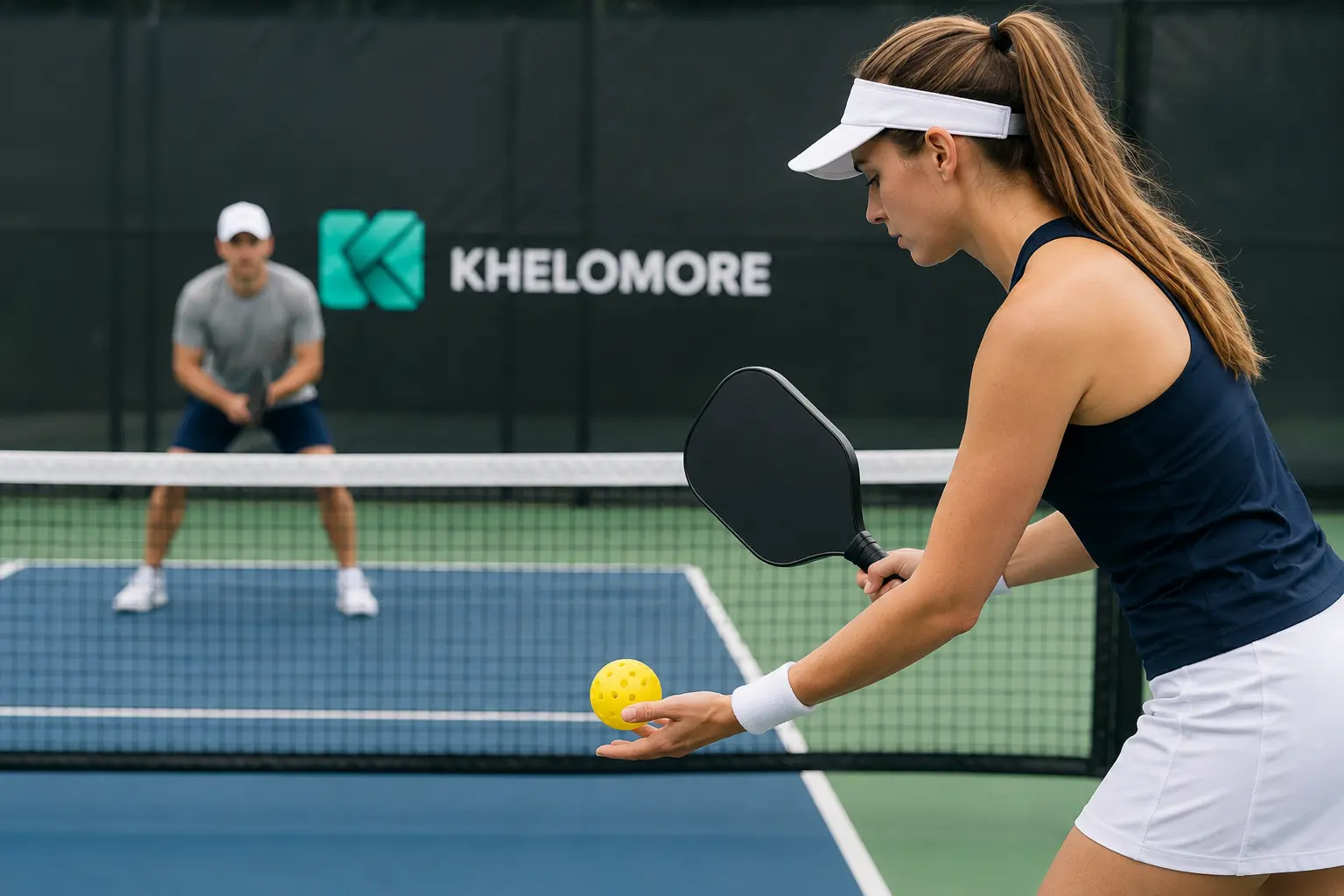
The serve is the only shot in pickleball that starts every single point, which makes it far more important than most beginners realize. A legal serve keeps the rally alive in your favor, while a faulty one hands the point straight to your opponent.
Pickleball serving rules cover more than just the motion of your swing. They decide where you can stand, how the score changes hands, and even how you should plan your shot selection for the rest of the point. This guide walks through the serving rules, common faults, and the serving order, then shows how each rule shapes real match strategy.
Pickleball Serving Rules: The Basics You Need to Know
Every serve in pickleball must follow a few core requirements. Under the current rulebook, a legal volley serve must:
- Contact the ball below the waist (roughly your navel line).
- Keep the paddle head clearly below the wrist at the moment of contact.
- Swing in a continuous, clearly upward arc, with no pause or hitch.
- Be hit with at least one foot behind the baseline and none touching the court.
There is also a legal alternative called the drop serve, where you drop the ball and let it bounce before striking it. The drop serve removes the strict waist and paddle-angle requirements, which is why many newer players prefer it.
The served ball must clear the net and the opponent’s non-volley zone (the kitchen), landing in the correct diagonal service court. If it clips the net but still lands in the right box, the serve is live and play continues as normal.
Pickleball Serving Order: Who Serves and From Where
In doubles, the serving order works like this:
- The game starts with one team serving from the right-side court, since the starting score is always 0-0-2 (the “2” shows the second server is serving first).
- Players on the serving team alternate sides after each point they win, serving from the right when their score is even and the left when it is odd.
- When the serving team loses a rally, the serve passes to their partner, unless it was the very first server of the game, in which case the serve goes directly to the opposing team.
- Once both players on a team have served and lost the rally, the serve moves to the other team.
In singles, there is only one player per side, so the same person serves the entire time it is their turn, switching sides between even and odd scores just like in doubles.
Common Pickleball Serving Faults
A fault results in an immediate loss of serve, so understanding these rules helps you avoid giving away free points.
| Fault Type | What Happens |
| Foot fault | Server steps on or over the baseline before contact |
| Illegal contact | Ball is struck above the waist or with the paddle head above the wrist |
| Out of bounds | Served ball lands outside the correct service court |
| Hits the net and fails to clear the kitchen | Serve does not cross the non-volley zone |
| Hits a permanent object | Ball touches a fence, post, or other fixture before landing |
| Hits the receiver | Served ball contacts the receiver or their gear before bouncing |
| Not grounded | Both of the server’s feet leave the ground at contact |
Since 2026, referees have more authority to call borderline serves as faults rather than giving the benefit of the doubt, so keeping your motion clean and clearly within the rules matters more than ever in competitive play.
Pickleball Serving Techniques Worth Practicing
A legal serve is only the starting point. The technique behind it decides whether your serve sets up an easy return for your opponent or puts you on the front foot.
- Deep serves push the receiver back toward their baseline, giving your team more time to move into position before the return arrives.
- Spin serves use paddle angle at contact to curve the ball’s bounce, making it harder for the receiver to time a clean return.
- Soft, short serves land near the kitchen line and can catch an opponent who is anticipating a deep, powerful serve.
- Drop serves are a reliable option under pressure since they remove the strict paddle-angle and waist-height requirements, reducing your risk of a fault.
How Pickleball Serving Rules Shape Strategy
Because the serving team cannot score unless they win the rally they started, serving rules directly affect how aggressively teams play their opening shots.
- The two-bounce rule requires the ball to bounce once on each side before either team can volley. This means the server usually cannot rush the net immediately, so serves are often used to set up the third shot rather than to win the point outright.
- Serve placement decides positioning. A deep serve to the backhand corner limits an opponent’s return options, often forcing a defensive shot your team can attack on the next ball.
- Faults cost more than a point. Since a serving fault hands the serve over entirely, teams that serve conservatively in tight games tend to protect their lead better than those chasing aggressive, high-risk serves.
- Serving order affects momentum. Because only one partner serves first in doubles at the start of a game, teams often put their more consistent server up first to avoid an early, costly fault.
Pickleball Singles Serving Rules
Singles follows the same core serve mechanics as doubles, but with a simpler side-switching pattern since there is no serving partner to rotate through.
- The server always starts from the right court when their score is even and the left court when it is odd.
- There is no second server; if the server loses the rally, the serve passes directly to the opponent.
- Because there is more open court to cover alone, many singles players favor deep, well-placed serves over risky spin serves that could result in a fault.
Pickleball Serving Strategy for Beginners
If you are new to the game, focus on consistency before power or spin. A serve that reliably clears the net and lands deep in the correct box, even without much pace, wins more points over a full match than a powerful serve that faults one time in four. Once your basic serve is dependable, start adding depth variation and the occasional short serve to keep opponents guessing.
Why Getting the Serve Right Matters on Court
Serving rules might look like a technical checklist, but they shape almost every point in pickleball. Getting comfortable with the serve, both the rules and the strategy behind it, is one of the fastest ways to improve your game. If you want hands-on practice, Khelomore’s pickleball clinics and starter camps are a good way to work on your serve with proper guidance before your next match.
Final Thoughts
A consistent, legal serve is far more valuable than one that is powerful but unreliable. A serve that regularly lands deep in the correct service box will win you more points over time than an aggressive serve that frequently results in faults. Once you have built confidence with the basics, start experimenting with deeper placement, angles, and the occasional short serve to keep your opponents guessing.
Serving is more than just the first shot of a rally. It sets the tone for every point and can influence the outcome of the entire match. By understanding pickleball serving rules and practising with purpose, you will avoid unnecessary faults and develop a smarter serving strategy. If you want to improve your technique with expert guidance, Khelomore’s pickleball clinics and community events provide an excellent opportunity to sharpen your skills before your next game.
Frequently Asked Questions
1. What are the basic pickleball serving rules?
The ball must be served underhand, contacting below the waist with the paddle head below the wrist, or hit as a legal drop serve after a bounce. The server needs at least one foot behind the baseline and must land the ball in the correct diagonal service court.
2. What counts as a serving fault in pickleball?
Common faults include stepping on the baseline before contact, hitting the ball above the waist, serving out of bounds, hitting the net without clearing the kitchen, or striking the receiver before the ball bounces. Any of these results in an immediate loss of serve.
3. How does the pickleball serving order work in doubles?
The starting team serves once before the serve passes to the opposing team. After that, both players on a serving team get a turn to serve before the serve changes sides, alternating between the right and left court based on the score.
4. What is a drop serve in pickleball?
A drop serve lets you drop the ball and let it bounce once before hitting it, instead of striking it out of the air. It removes the strict waist-height and paddle-angle rules that apply to a traditional volley serve, making it a safer choice under pressure.
5. Why is serve placement important in pickleball strategy?
Where you serve determines how your opponent can return the ball. A deep serve limits their options and often produces a weaker return, while a short or angled serve can catch an opponent out of position, setting up an easier next shot for your team.